
Outdoor Exhibits
Connect with undersea history before you even step foot inside the museum by touring our outdoor exhibits. Enjoy the chance to see and learn about these oversize artifacts on display outside the museum.
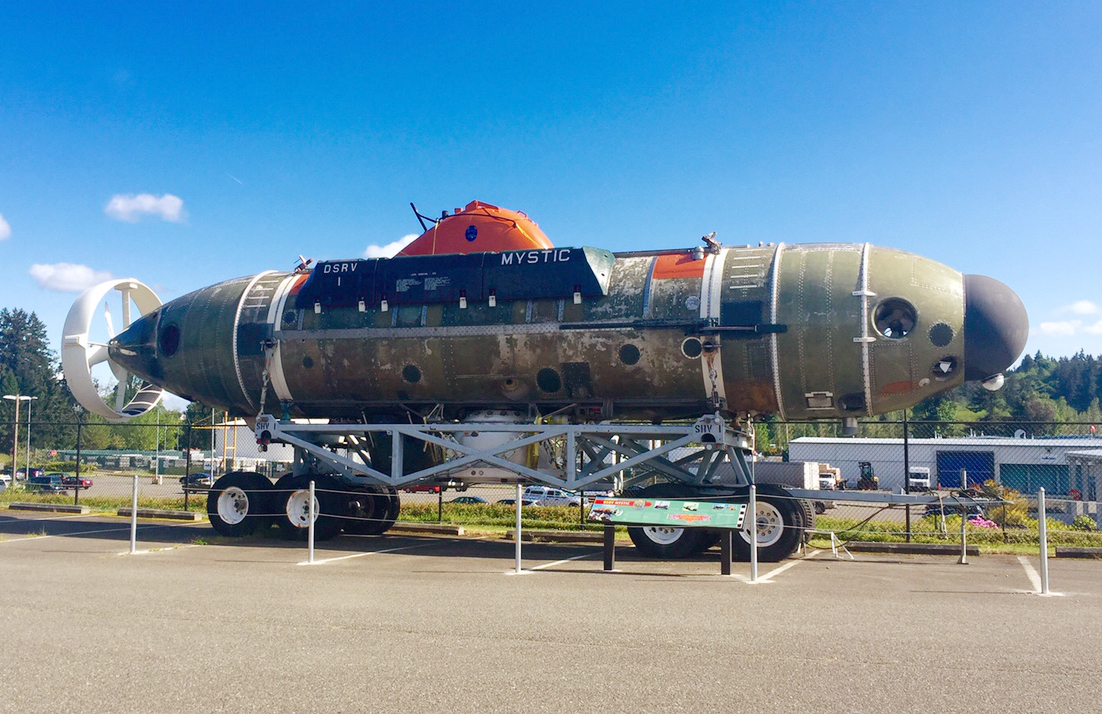
Mystic (DSRV 1)
DSRVs Mystic and Avalon provided rapid-response submarine rescue capability to the U.S. Navy from 1970 to 2008. In the event of a submarine accident, one of the Navy’s two deep submergence rescue vehicles (DSRVs) could be deployed to rescue survivors anywhere in the world. Although now retired, they remain two of the most technologically advanced submersibles in the world.
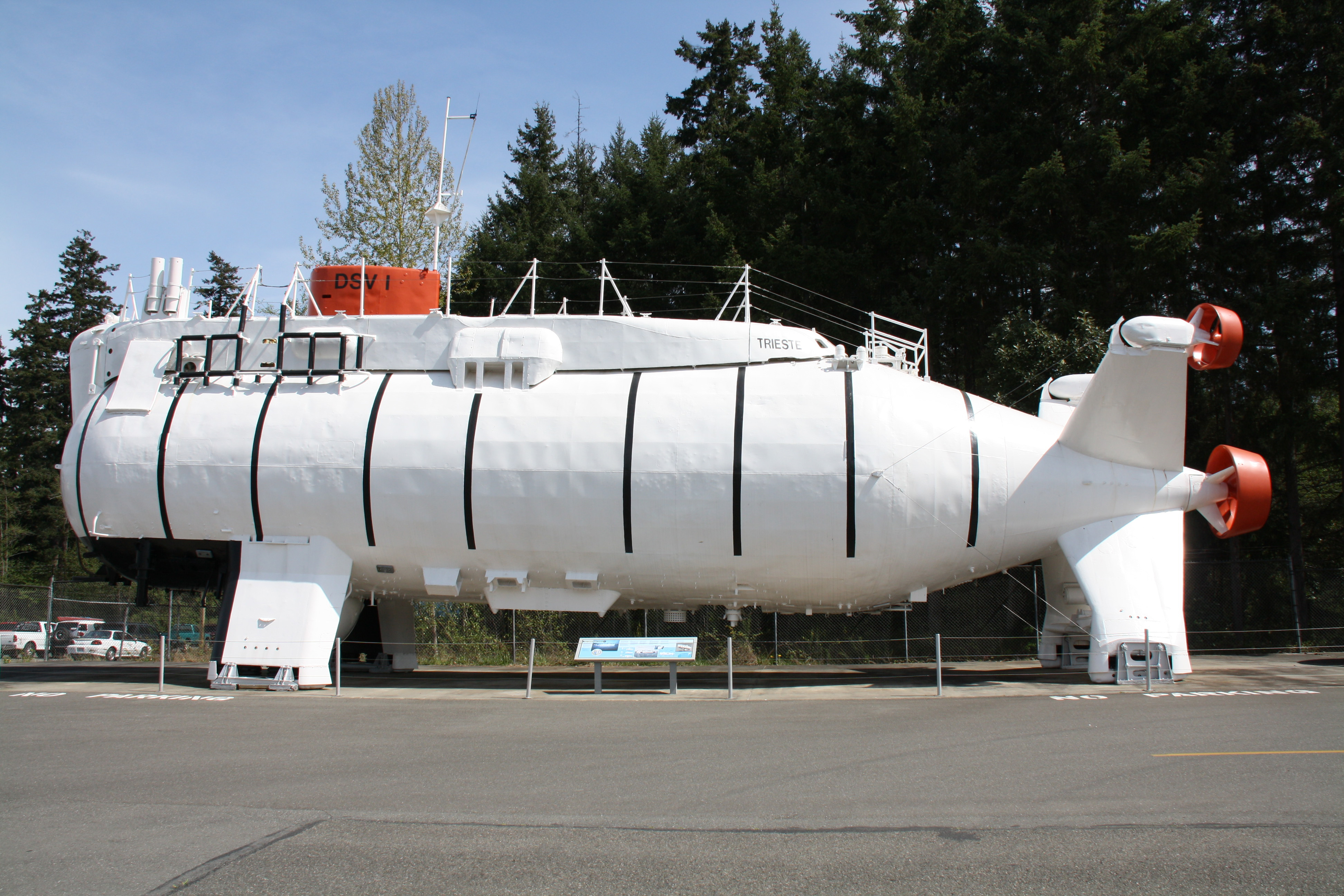
Trieste II (DSV 1)
Trieste II (DSV 1) was the first deep submergence vehicle built by the U.S. Navy, following its acquisition of the original Trieste bathyscaphe. With an operating depth of 20,000 feet, Trieste II performed undersea research and tasks, including examining the remains of USS Scorpion in 1969. Most recently, Trieste II made national news in late 2012 after the Central Intelligence Agency released information about a secret mission it conducted in 1972 to retrieve a lost spy satellite film capsule from 16,400 feet.

Sail of USS Sturgeon (SSN 637)
USS Sturgeon was the lead ship in her class of 37 fast attack submarines. Sturgeon-class submarines were the workhorses of the Submarine Force during the Cold War, conducting surveillance and reconnaissance missions, taking part in battle and strike group operations, and providing precision strike capability and ground warfare support. After Sturgeon was decommissioned in 1994, her sail was brought to the museum for permanent installation.
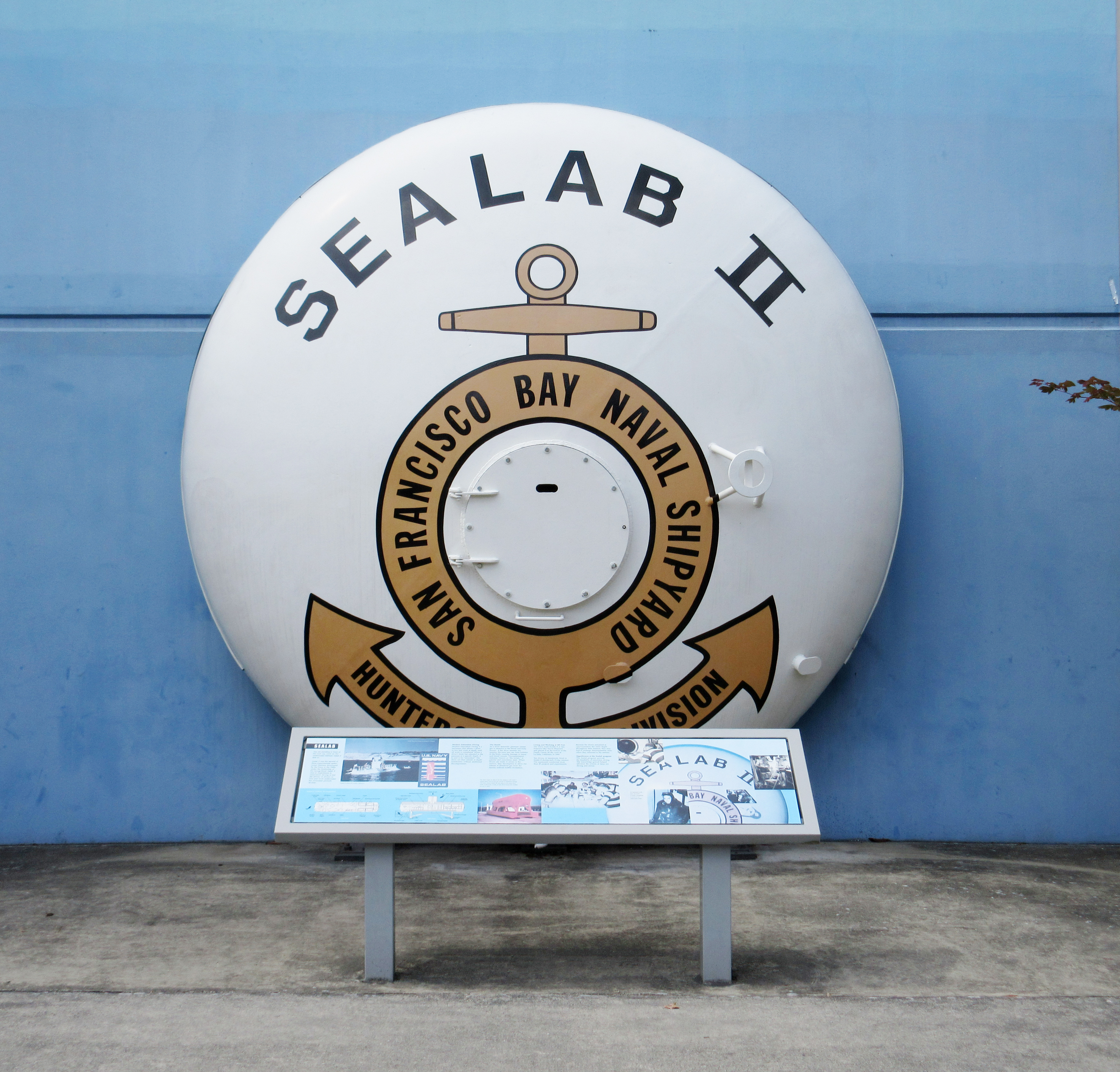
Sealab End Bell
The Navy’s Sealab projects of the 1960s tested and demonstrated the viability of saturation diving, which allows divers to live and work at great depths for days, weeks, or even months. This end bell is one of two dome-shaped end caps created for the Sealab II habitat the divers worked from. To form the end bells, Hunter’s Point Naval Shipyard personnel exploded C-4 plastic explosive underwater using steel and a concave die, a process called explosive metal shaping.